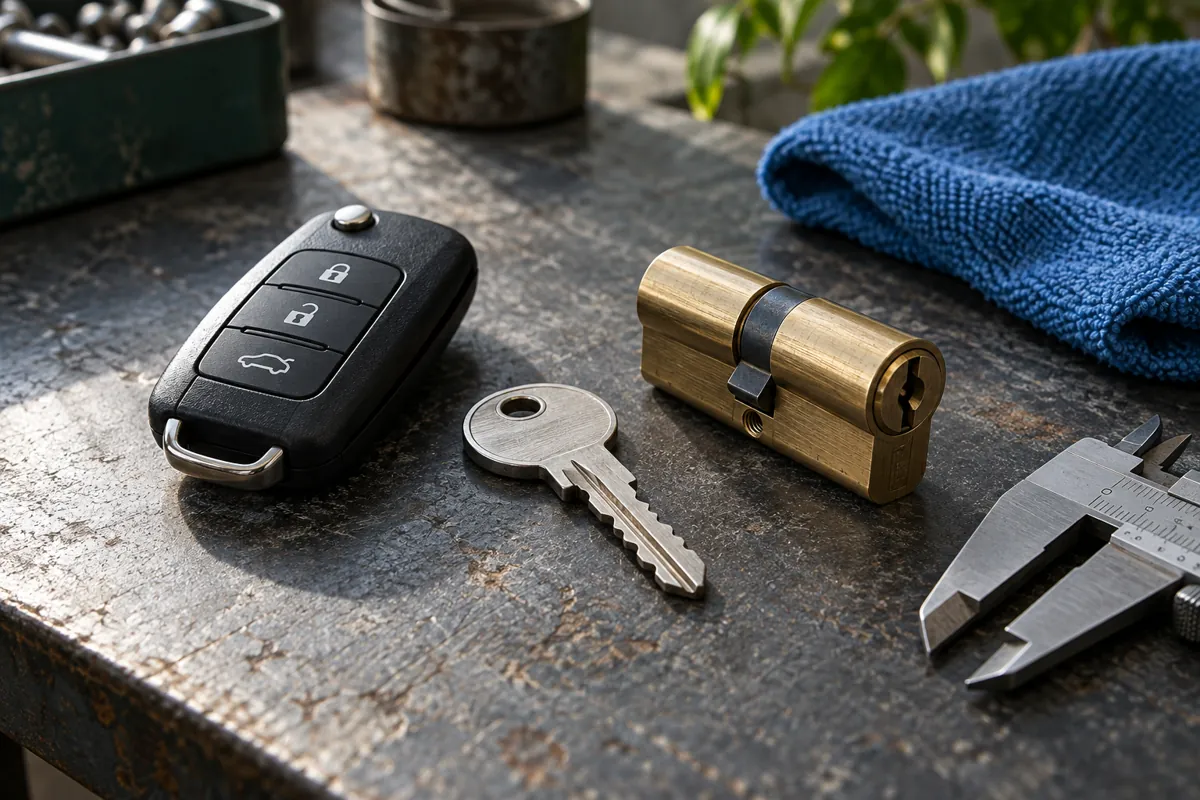
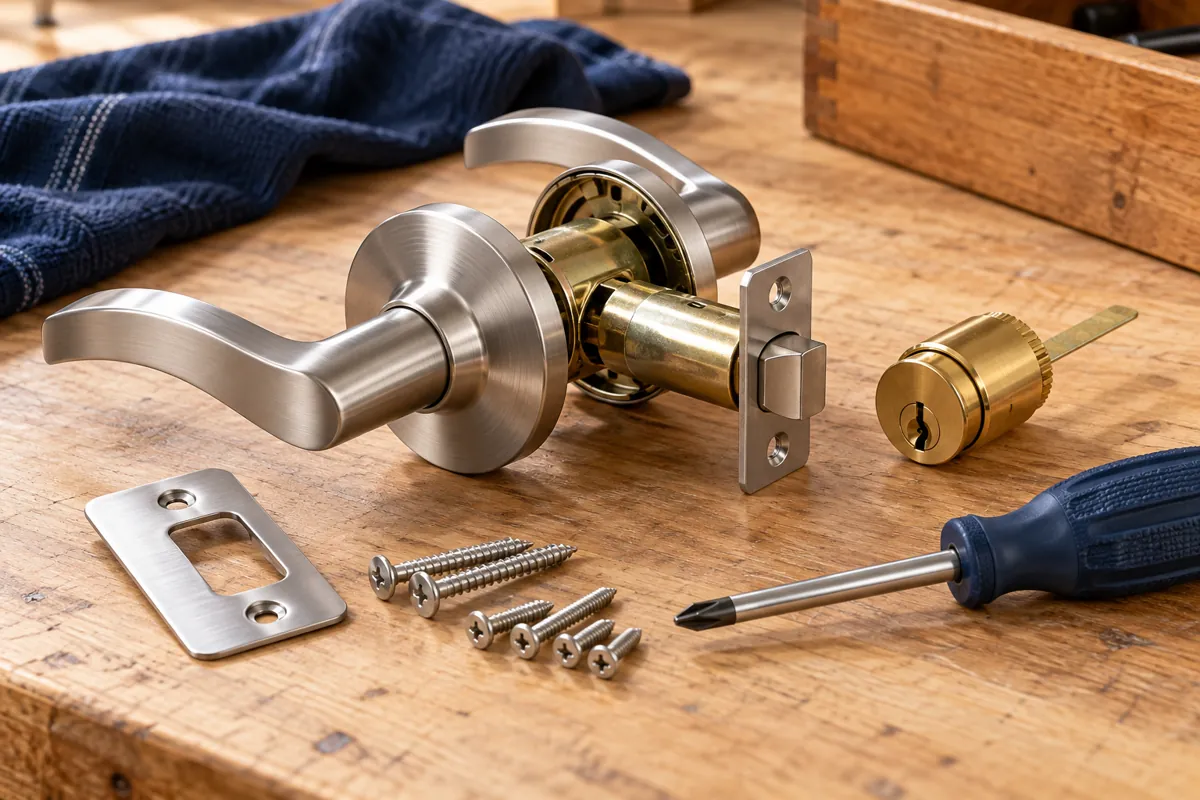
Understand what a rekey changes
Rekeying concerns the keying of a compatible cylinder. It does not automatically repair a door that rubs, replace a worn handle or change an electronic access system. Explain why you want the change and describe any existing fault. That allows the discussion to separate the access goal from repair or replacement work that may also be needed.
Count cylinders rather than doors
A deadbolt and a keyed handle on the same entrance may involve two cylinders. List every opening included in the request, any working keys and whether the locks currently share a key. Compatibility determines whether multiple locks can be arranged to use the same key. Ask about those limitations before relying on a one-key plan.
Coordinate shared and rented entrances
For a rented home or business suite, confirm who may authorize the work. A building entrance may belong to management even when the unit door is your responsibility. Explain whether anyone requires continued access and make arrangements with the appropriate party. Changing one cylinder should not create a surprise for an authorized user who depends on that entrance.
Check both access and operation
After the agreed change, test the new keys and confirm the intended behavior of the old key for the affected cylinder. Check the lock with the door closed as well as open. Keep a record of the openings rekeyed and the copies supplied. If hardware remains unreliable, request a separate explanation of the repair or replacement options.