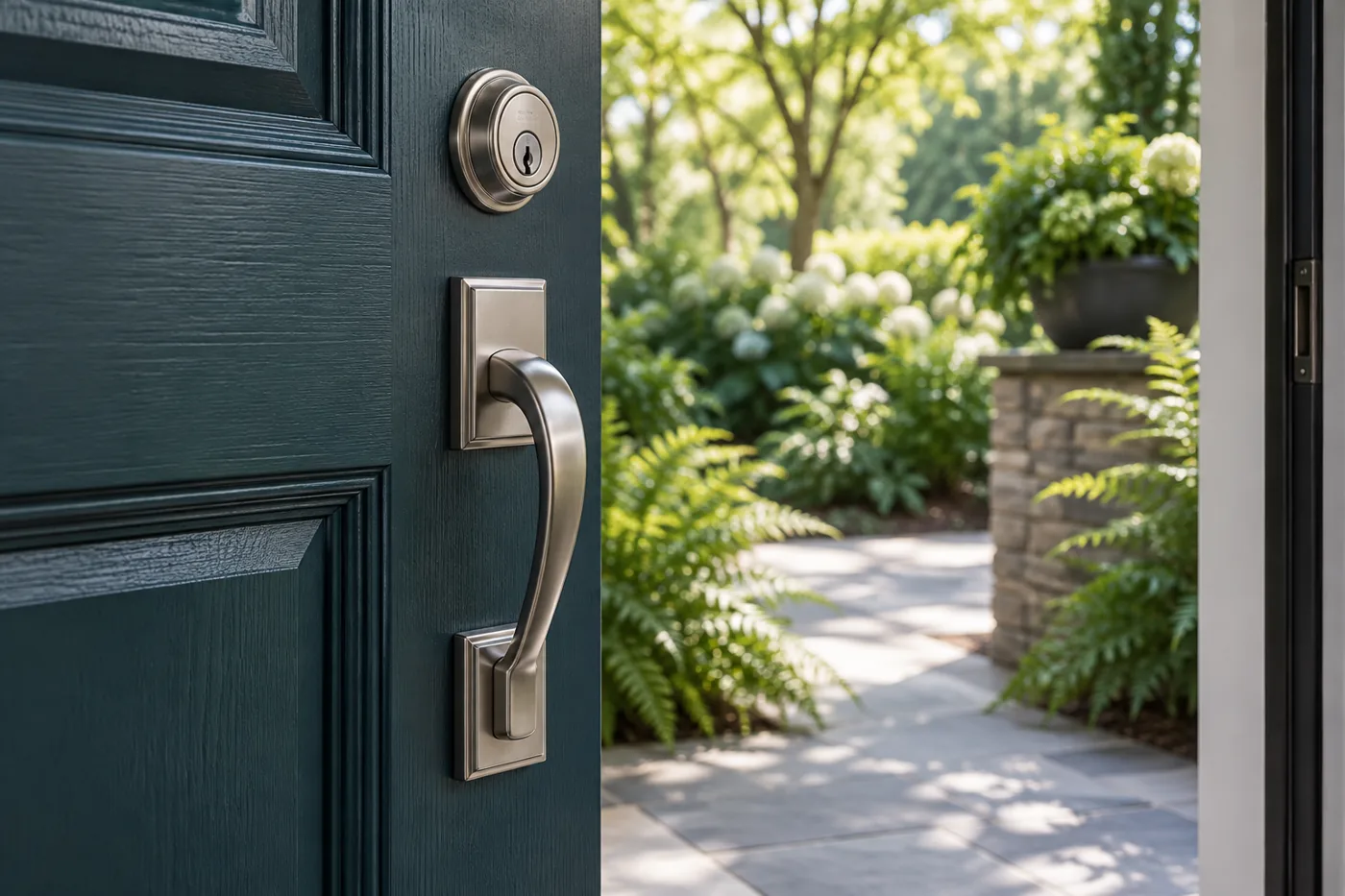

Start with the doors you actually use
List the front, side and other entrances involved in the request. Count individual lock cylinders, since one door can have more than one keyed lock. Explain whether keys are shared between doors and whether you want that arrangement to change. For a shared building, distinguish personal door hardware from an entrance controlled by management.
Moving in is an access decision
When keys have changed hands, rekeying suitable existing cylinders may be an option. Replacement may be more appropriate for damaged, unsuitable or incompatible hardware. Tell us which keys you received and the outcome you want. Discuss the condition of the door and lock before deciding that every visible component needs to be replaced.
A sticking lock may involve the door
Describe whether the lock behaves differently with the door open and closed, without forcing it. A key, cylinder, latch, strike or alignment problem can feel similar from the outside. Share any recent changes such as new weather seals or a difficult-to-close door. The purpose of those details is to guide assessment, not to diagnose the cause remotely.
Finish with a workable key plan
After agreed work, check locking and unlocking in normal use and try the supplied keys. Establish how many copies you need and who should hold them. If you rent or live in a managed property, coordinate required arrangements with the responsible person. Ask about any follow-up conditions and retain the invoice with your household maintenance records.